So you just got yourself a new smartphone ! Congratulations. We know you are excited to try out all the new features. But where do you start? Well, we got you covered. Here are some of the things you wanna do.
1. Charge up your device fully
Well, I know you are excited and all, but first, you need to juice up that baby. You need to charge it fully before you use it. See, the internet is torn between people that believe you need to charge up your new phone for 8 hours before you start discharging it. But another faction does not think it is necessary. I for one, have seen the science behind it and I don’t believe it is necessary to charge for 8 hours.
You should, however, plug her in until shes full. And in this era of crazy-fast fast charging , how long is that going to take you honestly? An hour? Just plug her in.
2. Uninstall all bloatware
Android phones are notorious for shipping with a bunch of preloaded apps and games, most of which you will never use. These apps already take up valuable storage on your device even before you get any of your data on it.
I like to compare this to sweeping your new house clean. Go into Settings , Apps , and Uninstall anything that is uninstallable. Of course, there are some that won’t be uninstallable. For those, disable them if you can.
3. Sign in to your Google/Apple account
You are done getting rid of everything that came with the phone. You now have a clean slate to start with. It is time to sign in to your Google account if you are on Android or your iCloud account for iPhone users.
Doing so links your new device to your Google account and with it, syncs all your customizations and preferences. You will also get all your contacts and emails on your new device once you have signed in to your Google account.
If you did not already do this during your device setup process, go to Settings , and select Google , or Accounts then Google , depending on which version of Android you are running.
4. Encrypt your phone (Set up a Password/Biometric Authentication)
Again, chances are you were asked to do this when you switched on your phone for the first time. See, fingerprints and Face ID are some of the secure biometric authentication methods you will have on your device.
Your new phone will soon be host to some of your most personal data. And you can’t afford to have this data in the wrong hands. You need to secure it. If you don’t want to enter your password, you need to set up your fingerprint, or your FaceID, whichever came with your phone.
To do this, go to Settings , Security , and locate the specific method of authentication you want to use. You should, however, bear in mind that no system is fool-proof.
5. Update the System
Sticking with the fact that no system is perfect, your phone maker is mandated to maintain your new device for a couple of years. As such, your phone maker needs to send you monthly security patches. Install all these updates to ensure your device is up-to-date and not vulnerable to malware .
To do this, go to Settings , About Phone , and select Software Update . Keep doing this periodically and install new updates as soon as they are available.
6. Update the System apps
Once you log into your Google Account, you will most likely get notified that a bunch of apps need to get updated. Do that through your App Store or Google Play Store. These app updates are different from system updates. While system updates are pushed to you by your phone maker, app updates are pushed to you by the various app developers through the app stores.
These app updates ensure that you are using the very latest version of the app without bugs and with all the latest features. It is good practice to keep your apps updated as that is one less loophole that ill-motive people could use to get your data.
7. Now transfer your data from your old phone
Many people prefer to set up new devices afresh. But if you are after continuity, you might have the need to transfer your photos, messages, apps, and your data from your old phone to our new one. While some phones allow for a seamless transfer of this, most don’t.
It is therefore important to take a look at your devices user guide and make sure this is doable, and how to do it.
8. Remember to keep the box and user guides safe
The phone’s packaging holds a lot of info about your phone, including the serial number and the IMEI among other things. In the unfortunate event that you lose your phone, these documents, including the receipt, will come in very handy.

Keep everything.Image courtesy of GSMArena
Keep these safe as they are proof of ownership. Also, you might find yourself needing to go through the user manual from time to time. It is better to have and not need than to need and not have.
Make the device your own
Go ahead and customize the hell out of that phone and make it your own. Change the wallpaper, install themes, change the ringtones, explore your device.
I’m a tech enthusiast and digital explorer based in Kenya passionate about Android, Linux, and the world of custom ROMs. I love tinkering with devices to craft personalized, optimized experiences. When I’m not deep in code or tweaking gadgets, you’ll find me immersed in science fiction, philosophy, or writing about the ever-evolving tech landscape from an African perspective.
Type your email…
Talkio Mobile , Uganda’s newest telecommunications service provider, is excited to announce a groundbreaking partnership with Banana Life Investments, a leading chain of mobile phone and retail shops. This strategic alliance aims to bring Talkio’s innovative telecom services closer to Ugandans.
This collaboration will leverage Banana Life Investments’ extensive retail network of 26 stores strategically located across Uganda in major malls, towns, and cities to provide customers with unparalleled convenience. Through this partnership, Talkio Mobile will offer its full suite of services, including SIM cards, airtime, and exclusive product offerings at any Banana Life Investment location.
This partnership is more than a business initiative—it’s a shared commitment to transforming lives. By integrating Talkio Mobile’s forward-thinking services & nationwide reach with Banana Life Investments’ retail footprint, the two brands are setting a new standard for customer convenience and inclusivity.
READ ALSO: 5 Things You Need to Know About Talkio Mobile: New Telecom Company in Uganda
“This partnership aligns perfectly with our mission of connecting Ugandans to innovative and transformative telecom solutions,” said Vianne Allan Ahura, CEO of Talkio Mobile. “By leveraging Banana Life Investments’ trusted presence and nationwide footprint, we are not only expanding our agent network but also bringing our services closer to the communities we serve. This collaboration ensures that our online customers can now enjoy a seamless offline experience right at their doorstep. Together, we are empowering Ugandans with the tools they need to stay connected, grow their businesses, and unlock new opportunities.”
Solomon Ssemuyaba, the assistant general manager at Banana Life Investments, echoed this sentiment: “We are proud to join hands with Talkio Mobile to deliver innovative, customer-centric solutions. This partnership represents our shared vision of fostering a connected future for Uganda. Together, we are redefining what convenience and accessibility mean for our customers.”
The partnership goes beyond retail distribution, introducing joint initiatives aimed at value addition and personalized service. Customers can expect seamless access to:
- SIM Card Sales : Available at all Banana Life Investments locations.
- Talkio phone number bookings : Book your preferred Talkio number at any Banana Life Investments location.
- Airtime Services : Recharge easily through in-store purchases.
- Customer Support : Friendly and knowledgeable staff trained to assist with Talkio Mobile products and services.
Additionally, the two companies plan to launch promotional campaigns and expand services to even more locations, ensuring no Ugandan is left behind in the digital transformation.
Solomon Obwot is a tech writer based in Kampala, Uganda, with extensive experience in the local tech startup ecosystem. He covers the latest news and analysis on consumer tech, writes in-depth smartphone reviews, and conducts insightful interviews with industry experts. Solomon is also a passionate podcaster, sharing his knowledge and engaging in discussions about Africa’s rapidly growing tech landscape. Send emails to [email protected]
Type your email…
Smartphones have, over the years, become a very important aspect of our lives. Its use has transgressed from basic communication (calling, texting, etc.) to our everyday work and personal lives. Nowadays, the average smartphone user stores personal files, multimedia, and other documents — banking details, social media, internet banking applications, shopping, work and personal emails etc. — on his device that could cost a fortune if in the wrong hands. This is where smartphone security comes in.
For years, numerical passcodes and alphanumeric passwords were how we kept trying eyes away from the contents of our devices. Now, smartphone manufacturers have stepped things up a notch by complementing the regular form of smartphone security with biometric authentication. And quite impressive enough, smartphones now sport biometric authentication tools that are were only possible on high-end computers.
We highlight all the biometric authentication technology that have been successfully implemented on mobile phones over the years, their advantages, downsides, prospects they hold, and smartphones that support each authentication methods.
Fingerprint
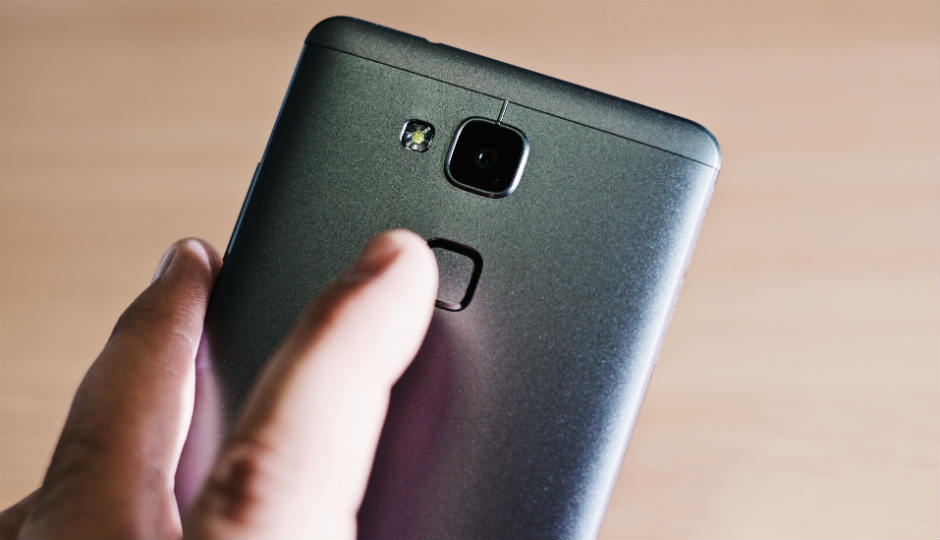
The fingerprint sensor or reader is one of the earliest biometric authentication technology to feature on a smartphone. The history of fingerprint authentication on smartphones dates back to 2004 when a South Korean company announced the Pantech GI100. The device was the first ever device to have a fingerprint scanner for authentication and speed dialing purposes. However, some sources opine that Apple started the modern-day fingerprint scanner revolution when it launched the TouchID with the iPhone 5s.
Pantech GI100
There are basically three types of fingerprint scanners used on smartphones and they differ in how they function and scan prints.
Optical scanners / sensors
Capacitive sensors
Unlike optical sensors that takes an image of your finger, capacitive sensors make use of capacitor circuits (its core component) to collect fingerprint data. This type of sensor is most used fingerprint sensor.
Ultrasonic sensors

This is a new sensor that was introduced by Qualcomm in 2016 on the LeeCo Le Max Pro. This sensor uses a transmitter to send ultrasonic pulse against your finger to create 3D details of your prints. Only ultrasonic sensors reproduce and store prints in 3D, making the ultrasonic system more secure than 2D versions created by optical and capacitive sensors.
Pros of Fingerprint scanning
Fast unlock time
Can be used for other purposes (like payment authentication) aside device unlock
Cons of Fingerprint scanning
Smartphone can be unlocked without user’s consent i.e when sleeping
Iris Scanner
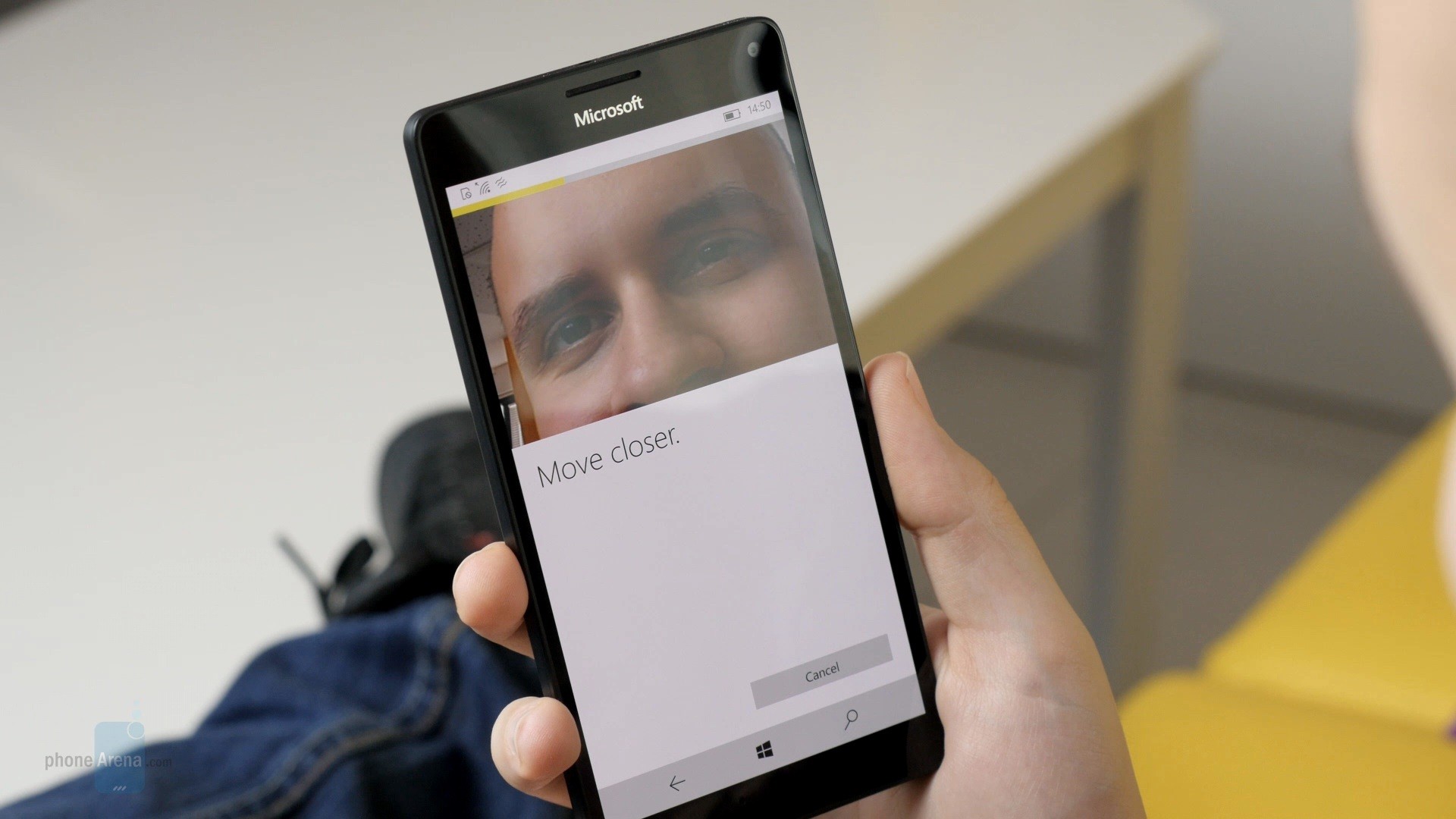
Iris scanning isn’t a very much popular biometric authentication method on a smartphone, it is also more sophisticated way of securing your smartphone. And though Iris scanning is commonly and mostly used on Samsung Galaxy flagships, the technology was first used on a phone — Fujitsu ARROWS NX F-04G — by Japanese company Fujitsu.
How does Iris Scanning work?
The structure of the human eye.
The Iris is a thin and circular structure in the eye. It adjusts the size of the pupil and also responsible for controlling the amount of light that enters the eye. Interestingly, just like fingerprints, no two humans in the world have exactly the same Iris.
The odds of any two irises being identical has been calculated to be one in 10 raised to the power of 78. Barring injury, the patterns remain stable through life, unlike faces, voices and even fingerprints.
The Iris scanner of your smartphone flashes near-infrared (NIR) light into one or both of your eyes to recognise your iris(es) and unlocks your device. The NIR light emitted by the iris sensor is safe and poses no risk to the user.
“The amount of infrared light is no more than would be received by walking outside on a sunny day.”
Pros of Iris Scanning
- Iris Scanning is more accurate — unlike fingerprint (40), the human Iris has 225 different points of comparison.
- Secures your device while you’re asleep.
Cons of Iris Scanning
- Iris scanners are expensive. Thus making phones with iris scanning capabilities generally pricier.
- Iris scanners can be fooled by a high quality (face or iris) image.
- Iris capture can be delayed if a user isn’t looking properly into the camera or if head isn’t still.
- Scanning under direct sunlight can be a problem since the iris may be obscured by bright reflections.
Some smartphones with Iris Scanning method of biometric authentication include Samsung Galaxy S9 Plus , Samsung Galaxy Note 9, LG G6, HTC U11 etc
Voice Recognition
Also known as Voice ID, Speaker recognition, or Voice Biometrics, Voice recognition is an authentication method that grants access to a device by identifying a user’s unique voice pattern.
How Voice Recognition works (www.howitwork.in)
When identifying and differentiating between voices, a device’s voice recognition software takes the following unique voice biometrics into consideration: sound, rhythm, pattern, dialect, speaking style, pitch, format frequencies and spectral magnitudes.
Pros and Cons of Iris Scanning
Voice recognition is also quicker, easier, and relatively more secure. However, there are reports and fears that a good mimic can bypass voice recognition authentication .
Facial Recognition
Facial recognition on Uhans i8 smartphone
Although Facial Recognition only recently became popular when Apple introduced to the iPhone X as Face ID, the isn’t the first instance the technology would be used on a smartphone. Facial Recognition as a form of smartphone security dates back to 2005 when ORMON Corporation, a global leader in automation, control technology, and sensing announced the OKAO Vision Face Recognition Sensor (which could be used on mobile phones, PDAs, and a y camera-enabled device) in Japan.
How does Facial Recognition works?
Depending on some factors like the manufacturer of your smartphone, facial recognition are of different types, have varying characteristics as well as patterns of functioning. Majorly, many smartphones that comes with the feature usually use the front-facing camera and dedicated software to record an image and properties of your face.
Each time you unlock your smartphone, it uses the front camera for recognition, comparing the original scan to what the camera sees. Advertisement - Continue reading below
Presently, there are many smartphones that comes with Facial recognition capabilities but Apple’s Face ID (on the iPhone X and subsequent iPhones), despite its shortcomings , is one of the most sophisticated.
Face ID on iPhone X
Face ID uses an IR beam projector and Infrared camera to create a 3D model of your face; it measures distance traveled by each beam before they hit your face. It is also the most effective, precise, accurate and safest facial recognition system ever used on a smartphone. Unlike most other facial recognition systems, Face ID takes extrinsic properties of the face like facial hairs, accessories into account. Its effectiveness isn’t hindered by growth or accessories as Face ID software automatically and occasionally recaptures and updates your facial template.
Pros
- Convenience — Facial Recognition might not be the safest method of biometric security, but you don’t have to tap buttons, keys, or touch any part of your smartphone before it unlocks.
- Fast and easy to set up
- Effectiveness not hindered by facial growth and accessories
Cons
- Intruders can gain access to your device if you’re asleep by simply placing your phone to your face.
Generally and conclusively, biometric authentication can not entirely replace PIN, passwords, patterns, code etc in terms of security and reliability, they can only supplement. Some of these biometric security systems are still in their early stages and undergoing research and development. Fingerprint sensors, for example, are now being placed under displays. Facial recognition are also becoming faster. It is becoming pretty much obvious that biometric means of authentication is the future of smartphone security.
Sodiq Olamide is a tech writer based in Nigeria, covering the latest reviews, how-tos, and news on consumer tech trends with a unique African perspective. Whether analyzing emerging technologies or offering practical guides, Sodiq brings a deep understanding of how technology shapes lives across the continent.
Type your email…
With the launch of the iPhone 5S and its TouchID in 2013, the world was introduced to the whole biometric authentication frenzy that would go on to take over the smartphone industry. Fast foward to 2019 and we have since moved onto fancier biometric authentication methods like LG’s new Hand ID, Apple’s FaceID and Samsung’s Iris Scanning.
Fingerprint scanning is the reigning king though. You can find devices that cost less than $100 that have these sensors and they are very accurate at that. With TouchID having matured for almost a decade now and the tech behind it matured enough, how secure is this mode of authentication really?
Can you unlock a phone with a fake fingerprint?
So can your phone be unlocked without your finger? With a lot of effort and know-how, Yes.
Tech is a double edged sword. With a high enough resolution of the image of someone’s fingerprint, the technology we have today can be used to generate a good enough replica of your fingerprint, good enough to fool your phone into unlocking for someone else. .
Granted, for the average person, this kind of tech might not exactly be within their reach but for instance, governments with enough resources could very well pull this off.
A group at Michigan State University took a 300 dpi scan of a fingerprint and printed it with special ink on glossy paper. They were able to use it to fool the fingerprint scanner of a Galaxy S6.
Back in 2013, Germany’s Chaos Computer Club took a high-resolution photo of a fingerprint from glass and used it to make a latex reproduction of the print that could fool the sensor. Here’s a video of this method in action.
So which method is secure?
If you want to be the only one able to access your phone, maybe you should use a passcode. With Android’s 9-Pin pattern, a stranger has a 0.003% chance of unlocking it.
With a more traditional 6-Digit unlock code, there are 1,000,000 different combinations so chances of a false unlock are down to 0.0001%. A 2D face unlock is the least secure with a 0.1% chance so really, the 6-digit PIN is more secure.
| Smartphone Unlock Method | Total Possible Combinations | Approximate false Acceptance Rate |
|---|---|---|
| Android’s 9-PIN Pattern | 389,112 | 0.0003% |
| iOS 6-Digit PIN | 1,000,000 | 0.0001% |
| Android’s 2D Face Unlock | 1,000 | 0.1% |
| Capacitive Fingerprint | 50,000 | 0.002% |
| iOS Face-ID | 1,000,000 | 0.0001% |
Again, for the average person, these are still very good odds and they’d be more than happy to rely on fingerprint authentication for unlocking their devices. These offer a level of convenience and that these sensors have gotten really good over the years is just icing on the cake.
What is your go-to method of authentication? Does your device have a different mode of authentication other than a fingerprint? Tell us in the comment section below.
I’m a tech enthusiast and digital explorer based in Kenya passionate about Android, Linux, and the world of custom ROMs. I love tinkering with devices to craft personalized, optimized experiences. When I’m not deep in code or tweaking gadgets, you’ll find me immersed in science fiction, philosophy, or writing about the ever-evolving tech landscape from an African perspective.
Type your email…
The Mobile World Congress (MWC) Barcelona , the world’s largest exhibition for the mobile industry, has just concluded. This annual event gathers leading technology brands to unveil groundbreaking mobile, AI, and digital solutions innovations. At MWC 2025, TECNO showcased a range of AI-driven products, reinforcing its commitment to cutting-edge technology.
The key launches included:
- CAMON 40 Series – AI-powered smartphones with One-Tap FlashSnap and advanced mobile imaging features.
- MEGABOOK S14 – The world’s lightest 14-inch OLED laptop, featuring AI-enhanced multitasking and Snapdragon® X Elite.
- MEGABOOK T14 Air & K15S – Lightweight ultrabooks with AI capabilities and extended battery life.
- TECNO AI Glasses Series – Smart eyewear integrating AI imaging, translation, and AR display.
Jan Stryjak, Associate Director at Counterpoint Research, shared, “In the past year, we have observed significant advancements in the field of AI. AI will continue to drive transformative changes in our daily lives. In this critical period for the economic development of emerging markets, TECNO’s AI technologies are unlocking potential for diverse needs.”
“The application of AI technologies is crucial and urgent in emerging markets. We’re committed to bridging the digital gap between emerging and mature markets,” said TECNO CMO, Laury Bai. “TECNO is taking a practical approach to make AI more accessible, ensuring users in emerging markets can access AI and cutting-edge technologies.”
Laury Bai, TECNO CMO
Driven by its commitment, TECNO has forged a robust partnership with MediaTek, establishing a joint AI laboratory dedicated to accelerating advancements in AI. At the event, James Chen, Vice President of Product and Technology Marketing at MediaTek, emphasized, “The synergistic R&D efforts between TECNO and MediaTek are set to democratize AI technology. Our collaboration powers a seamless, interconnected AI experience, bringing users a future of truly connected intelligence.”
James Chen, Vice President, Product and Technology Marketing at MediaTek
CAMON 40 Series Powered by AI One-Tap FlashSnap Revolutionizes Smartphone Snapshot Photography
TECNO’s Global Product Launch Officer, Olivier Mas, officially unveiled TECNO’s next-generation AI-driven products. Attendees at TECNO’s launch event witnessed the highly anticipated debut of TECNO’s new CAMON 40 Series, a device that embodies TECNO’s legacy of excellence in mobile imaging. Featuring One-Tap FlashSnap Mode and TECNO AI, the series sets a new benchmark in smartphone photography, delivering exceptional snapshot capabilities and AI-enhanced user experiences.
Olivier Mas, TECNO Global Product Launch Officer
The CAMON 40 Series exemplifies a commitment to innovation that transcends hardware and software, extending into strategic partnerships that deliver cutting-edge AI solutions to emerging markets. Matt Waldbusser, Managing Director of Global Solutions and Consumer AI at Google Cloud, remarked, “Our collaboration with TECNO on the CAMON 40 Series is a standout example. Leveraging Google Cloud’s capabilities, we’ve introduced groundbreaking features such as Ask Ella, AI Image Generator, AI Writing, and AI Translate. I am particularly impressed by the industry-leading and competitive edge of some of these innovations. For instance, TECNO’s AI supports text translation in 136 languages, voice translation in 44 languages, and photo translation in 51 languages. We are excited to further strengthen our partnership with TECNO, unlocking limitless potential to bring advanced yet practical AI capabilities to emerging markets in a convenient and secure manner.”
Matt Waldbusser, Managing Director of Global Solutions and Consumer AI at Google Cloud
The CAMON 40 Series’ innovative One-Tap FlashSnap leverages AI to enhance imaging capabilities, revolutionizing mobile photography. AI optimizes camera startup and continuous shooting for instant captures, while AI-powered multi-frame processing intelligently reduces noise and enhances details, delivering sharper, more refined images. Additionally, the BestMoment algorithm analyzes motion patterns, automatically selecting the optimal frames for precise, high-quality shots in dynamic scenarios, ensuring users an unparalleled mobile imaging experience.
TECNO CAMON 40 Demonstrates the Cutting-Edge FlashSnap Capability
To delve deeper into the imaging prowess of the CAMON 40 Series, TECNO invited Frédéric Guichard, CEO of DXOMARK, to share the image performance of CAMON 40 Pro. Frédéric highlighted, “The CAMON 40 Pro 5G has demonstrated exceptional imaging and performance capabilities in our rigorous evaluations. We’ve been particularly impressed with photo performance being the best for devices under 600$, and the 1st eligible device to our Smart Choice Label.”
Onsite photo of Frédéric Guichard, CEO of DXOMARK
Beyond its advanced rapid-capture functionality, the integration of TECNO AI further enhances the device’s capabilities. Intelligent imaging, a 360° AI Call Assistant, and productivity tools elevate creativity and efficiency. Powered by MediaTek’s latest chipsets, the series ensures smooth performance, fast processing, and extended battery life. With a sleek, durable, and water-resistant design, it seamlessly blends style with practicality for modern users.
MEGABOOK S14, the World’s Lightest 14-inch OLED Laptop, Inspires Creators and Game Lovers
The MEGABOOK S14 is TECNO’s first OLED laptop and the industry’s lightest 14-inch OLED laptop, featuring a 2.8K OLED display and incredibly weighing only 899g (31.7oz). The laptop is equipped with the outstanding power of the Snapdragon® X Elite compute platform, the flagship chipset for AI PCs from Qualcomm Technologies, and integrates TECNO’s world’s first self-developed edge-side large-scale AI model, to achieve AI-enhanced multitasking.
World’s Lightest 14-inch Laptop MEGABOOK S14
Specifically designed for next-gen AI productivity, TECNO AI enhances the Ella AI Assistant, AI-powered PPT generation, AI-driven image search, smart albums, and offline meeting transcription with multilingual support. The External Graphics Dock, equipped with a powerful NVIDIA graphic card, delivers scalable, high-performance capabilities for design, gaming, and content creation. The laptop’s 2.8K OLED display with a 120Hz refresh rate ensures exceptional visuals, while DTS:X Ultra dual 2W speakers, Wi-Fi 6E, fingerprint login, and PC Manager optimize connectivity and user experience.
TECNO’s strategic partnership with Qualcomm Technologies was a highlight of the TECNO AI Ecosystem Product Launch event, demonstrating a shared vision for the future of AI PCs. Kedar Kondap, SVP & GM of Compute and Gaming at Qualcomm, took the stage to discuss the integration of Qualcomm’s cutting-edge PC chipset into the new MEGABOOK S14 laptop, underscoring TECNO’s commitment to delivering high-performance computing solutions.
Kedar Kondap, SVP & GM of Compute and Gaming at Qualcomm
In addition, TECNO also introduced several standout new products. The featherlight 999g (35.2oz) ultrabook MEGABOOK T14 Air, features high-speed storage and LPDDR5 memory, while the ultra-thin, all-metal MEGABOOK K15S, equipped with a powerful 70Wh battery and supported by a 65W PD GaN charger, offers a smarter and more long-lasting user experience. Both devices are empowered by TECNO AI with advanced AI capabilities such as AI Album and AI Voice Assistant, making them perfect companions for all aspects of life.
The Next Game-Changing Tech Innovation: See the World with the TECNO AI Glasses Series
TECNO’s new AI Glasses Series also took center stage with the introduction of TECNO AI Glasses Pro and TECNO AI Glasses, reimagining eyewear with cutting-edge imaging, intelligent interactions, and a sleek aesthetic. The TECNO AI Glasses feature an aviator design, while the Pro model showcases a browline style, both embodying timeless elegance and modern fashion.
TECNO AI Glasses Redefine the Way People See the Future
Equipped with a 50MP high-definition camera, the series integrates an OV50D sensor, a 100° ultra-wide-angle custom lens, and an AI ISP imaging chip, forming a mobile-grade imaging system. This system lets users capture stunning, high-resolution photos with advanced AI noise reduction and HDR capabilities. With real-time translation supporting over 100 languages, TECNO AI’s Ella empowers accurate translation even for less common languages, as well as voice control, AI-powered object recognition, and intelligent information summaries for ultimate convenience.
Additionally, the AI Glasses Pro features a MicroLED display with 7th-gen resin waveguide technology, offering a 30° field of view, over 1,500 nits of brightness AR display, and a lightweight, ultra-thin design. The AR display allows users to effortlessly enjoy features like translation display, navigation, information prompts, and teleprompting.
Equipped with a 250mAh battery, these glasses offer over 11 hours of music playback and 8 hours of mixed use with just 30 minutes of charging. An advanced ultra-linear speaker, bass enhancement, and spatial sound deliver an immersive audio experience, while Wi-Fi 6 and Bluetooth 5.4 ensure seamless connectivity.
With these innovative launches, TECNO is setting new standards in mobile imaging and AI-enhanced technology, shaping a more connected and empowered future for consumers in emerging markets. Once again, TECNO has showcased its cutting-edge innovation on the global stage at MWC. With the brand essence of “Stop at Nothing”, TECNO’s relentless pursuit of innovation is making AI-powered technology more accessible, allowing consumers to experience the future ahead of time.
Solomon Obwot is a tech writer based in Kampala, Uganda, with extensive experience in the local tech startup ecosystem. He covers the latest news and analysis on consumer tech, writes in-depth smartphone reviews, and conducts insightful interviews with industry experts. Solomon is also a passionate podcaster, sharing his knowledge and engaging in discussions about Africa’s rapidly growing tech landscape. Send emails to [email protected]
Type your email…
