It’s 2020, almost every mobile money provider has a mobile app companion to extend services delivery. And quite interestingly, the user interface and overall user experience of mobile apps are considerably better than USSD .
In this neck of the woods, MTN Group has the MTN Momo app for mobile money services and MTN MyApp for products and services. Meanwhile, Airtel packs everything in the myAirtel app . Another big part of making mobile money more useful is increasing the number of products and services that can be purchased with it.
Follow our thoughts as we compare these apps from the leading two telecom providers in Africa. We’ll explore the core features, UI and UX, performance & security, storage and how it is improving the core telecom layers beyond the sim card interfaces.
Mobile Money Features

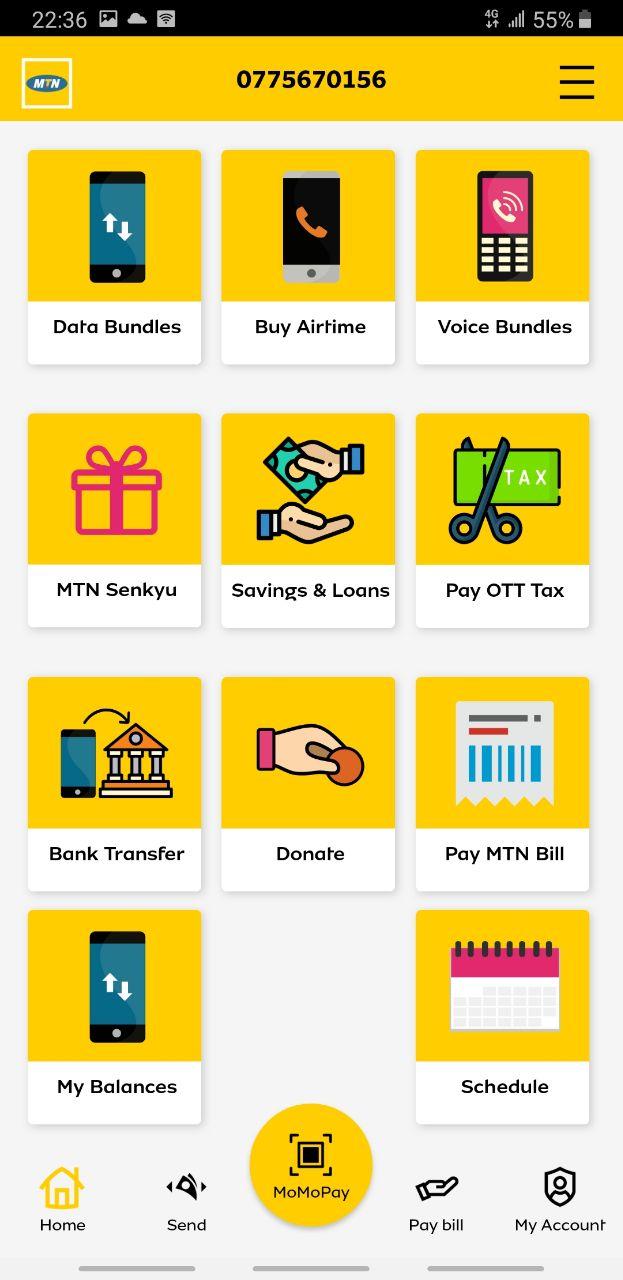

The important part of making mobile money more useful is increasing the number of products and services that can be purchased natively with it. For the case of MTN Group, they have opted to distribute it over two mobile apps which is a bit unpleasant.
myMTN App & MTN Momo App Mobile Money Features
The myMTN app is mainly used for MTN’s product and services; to purchase airtime, minutes, SMS, pay OTT tax and data. You can also use it to pay for international and roaming bundles. Additionally, you can get 100% credit on your daily bundles (thanks to the new Dobolo campaign ) when you purchase from the myMTN app.
The biggest perk for me using this app has been the airtime/data sharing option. Sharing data via the app is straight forward: enter the recipient phone number and the amount of data to share (without adding the unit i.e. MB or GB). You can share a minimum of 5MBs and max of 1GB.
The downside for me has been paying for the controversial social media OTT tax . The checkout process where the payment option is only mobile money and none like an option to pay using the airtime. Why use an app that will take you to another platform to complete a transaction, it’s better you remove the functionality altogether.


MTN Momo app is mainly used for mobile money services as the name suggest and does a phenomenal job in doing so.
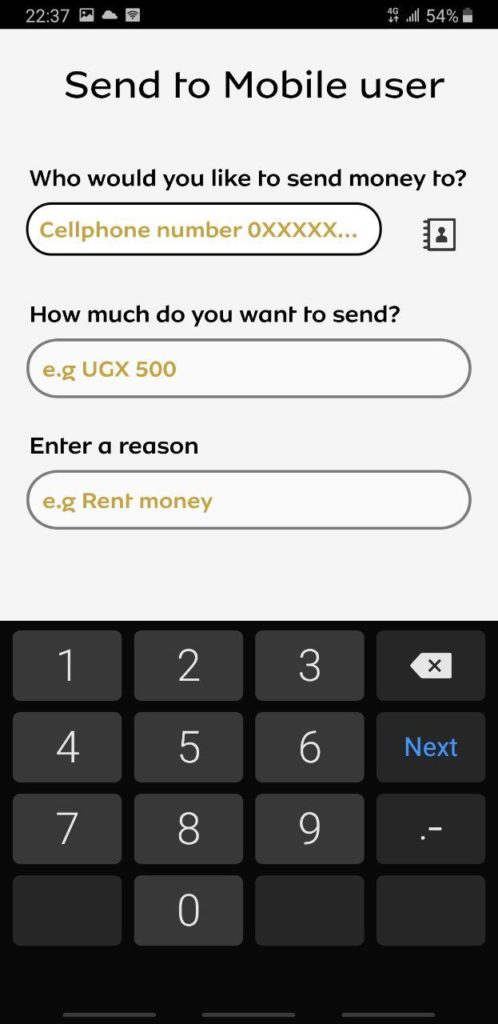
Sending money is simple and direct. First, you choose if you want to send a registered MTN mobile user or a third-party user. Then you enter the cellphone number, the amount you are sending plus the reason. And you are done. You will see the account details for the recipient before confirming the transaction.
Other additional features include paying school fees, bill payments, savings & loans, bank transfers, donation and all the MTN service that the myMTN app does.
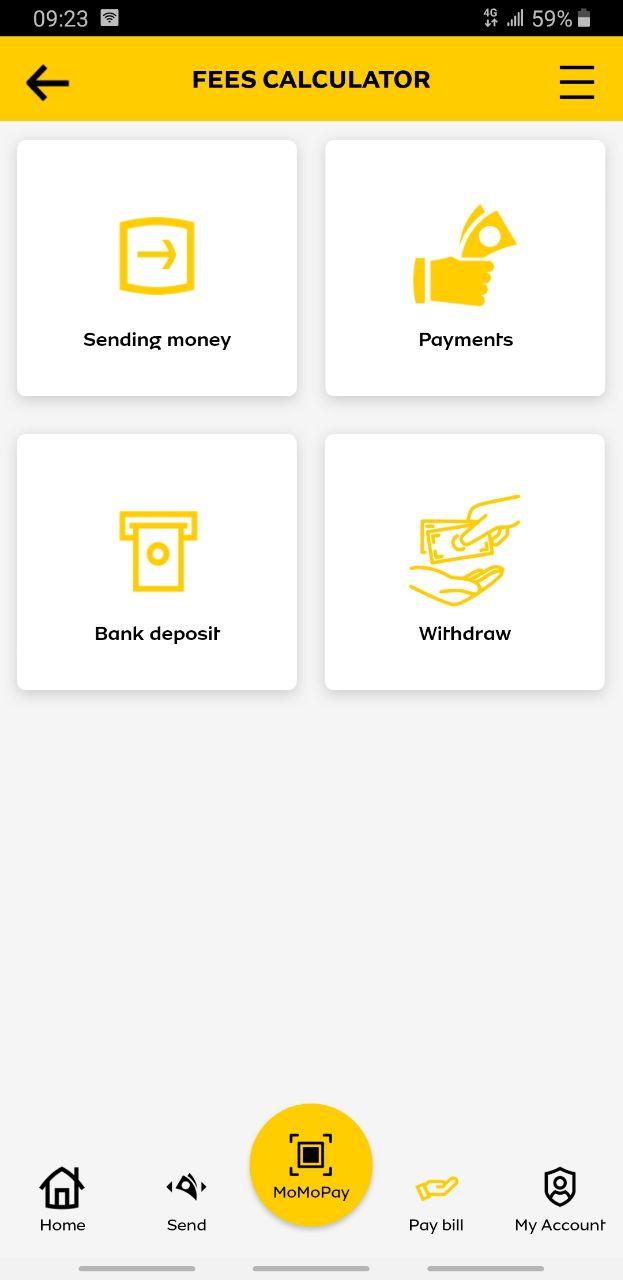
Another useful aspect of the app I got was the fees calculator, you can calculate the transaction fees (withdrawal charges, bank deposit and payment charges) you’ll be charged when sending money to MTN users and other numbers. All of these come beneficial when you are cost-sensitive and wants to know upfront what all these charges are before making a transaction.

myAirtel App Mobile Money Features
The myAirtel app is a one-stop center for all Airtel services such as buying data, voice and SMS bundles, bill payments, and combos. Additionally, all mobile money services including Bank and wallet money transfers are only a few taps away.
In the functionality department, the myAirtel app doesn’t lack anything significant but rather add a Midas touch to the platform with some of the features. The top two features that stood out for me are the Airtel Shop location finder and the referral program.
Refer to earn up to 50MBs of data whenever a colleague redeems your referral link by registering on the myAirtel app. Your friend, on the other hand, gets up to 200MBS worth of data when they use your link.
On the Airtel shop locator, the app pulls your location and shows a list of all nearby Airtel shops to help you in case you are looking for one. This works whenever you download the app regardless of whether you’re a registered user or not. Plus, it looks like the service is pulling resources from Airtel Uganda’s official website.


We haven’t talked about all the features on all apps but here are some vital features you should know when making up mind to download one;
| Features | MTN MoMo | MTN myApp | myAirtel App |
|---|---|---|---|
| Goods and Service Payment via QR Scan | Yes | No | Yes |
| Send Money | Yes | No | Yes |
| School Fees Payment | Yes | No | Yes |
| Buy OTT Tax | Yes | Yes | Yes |
| Transaction History | Yes | No | Yes |
| Utility payment | Yes | No | Yes |
| Bank withdraws and deposit | Yes | No | Yes |
| View mobile money transaction fees | Yes | No | Yes |
Interface & Usage Experience
Although the initial value proposition of mobile money use cases were local remittances and p2p payments, we are now seeing the case widen with the mobile financial services.
Now, this is a big bonus when using the app and I can’t wrap my head around why Airtel can’t do the same for their mobile app. You need mobile data or an active data plan to use myAirtel app.
On Android phones, the OTP PIN is automatically filled in to complete the login process when using the same SIM cards on the phone. This is only possible when using the MTN MoMo app.
When accessing Airtel Money on the myAirtel app, you have to click Proceed to continue which is unnecessary and required to enter mobile money PIN every time you are completing any transaction.
What I find extra cool using the myAirtel app when sending money is Airtel loads your contact to the app so you don’t have to remember the phone numbers but rather choose from the contact list within the app.
Performance and Security
MTN Momo app uses 2-factor authentication when before logging into your account. After entering your mobile money PIN, a temporarily 4 digits OTP is sent to your phone number to complete the registration process before going to the account dashboard.
Performance-wise, both MTN apps are a bit more superior to the myAirtel app. There is no wait time when switching between tabs and selecting services; your payments are immediately completed whenever you confirm the transactions.
myAirtel loads without any security authentication. This is quite bad considering that the app dashboard has sensitive information like your number, the airtime balance, and the data.
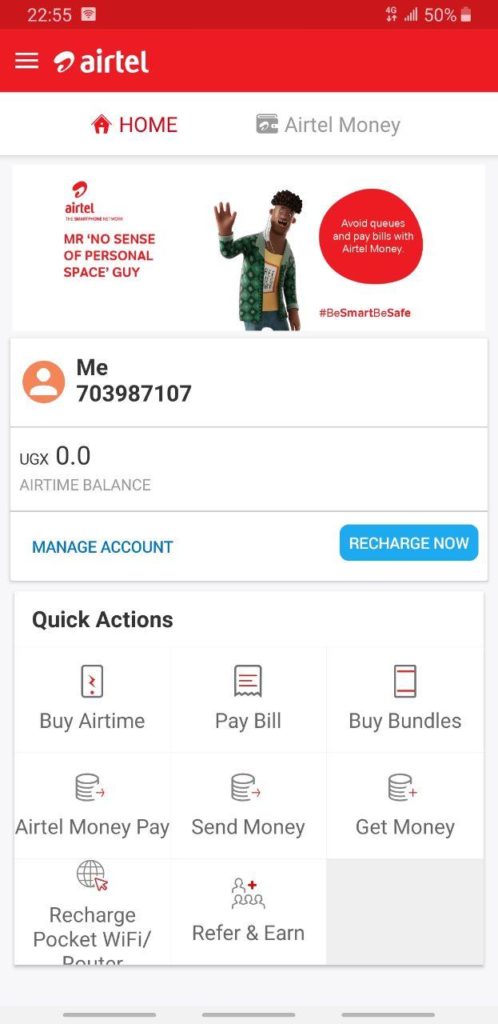
All apps can use extra security options, though. A security lock feature like fingerprint or face unlock would be highly instrumental in this scenario.
Storage
Storage is a big determinant when it comes to installing an app and here is how much space the app will consume from your phone’s storage.
| App | Andriod Play Store | Apple App Store |
|---|---|---|
| myMTN App | 39MB | 60.3 MB |
| myAirtel App | 51MB | 128.3 MB |
| MTN MoMo App | 13MB | 30.7 MB |
Final Rating
The question of which app is superior is quite subjective as it depends on the task you want to accomplish. The fact that MTN Group requires you to download 2 separate apps to be able to fully use their services says a lot about their direction and how they are faring in the mobile financial services which I feel not all customers will appreciate.
Personally, I liked the experience with the MTN MoMo app. It ticks all the boxes for a super app when it comes to managing financial services but the idea of having another app companion doesn’t sit well with me.
On the other hand, Airtel makes life easier with the myAirtel app. Combining all services under one roof comes with a myriad of benefits. The porous security is a downside but overall, it’s a decent app that gets things done.
If you’ve used any or all of these app, tell us about your experiences in the comment section below. Which app do you like the most and why?
Solomon Obwot is a tech writer based in Kampala, Uganda, with extensive experience in the local tech startup ecosystem. He covers the latest news and analysis on consumer tech, writes in-depth smartphone reviews, and conducts insightful interviews with industry experts. Solomon is also a passionate podcaster, sharing his knowledge and engaging in discussions about Africa’s rapidly growing tech landscape. Send emails to [email protected]
Type your email…
Talkio Mobile , Uganda’s newest telecommunications service provider, is excited to announce a groundbreaking partnership with Banana Life Investments, a leading chain of mobile phone and retail shops. This strategic alliance aims to bring Talkio’s innovative telecom services closer to Ugandans.
This collaboration will leverage Banana Life Investments’ extensive retail network of 26 stores strategically located across Uganda in major malls, towns, and cities to provide customers with unparalleled convenience. Through this partnership, Talkio Mobile will offer its full suite of services, including SIM cards, airtime, and exclusive product offerings at any Banana Life Investment location.
This partnership is more than a business initiative—it’s a shared commitment to transforming lives. By integrating Talkio Mobile’s forward-thinking services & nationwide reach with Banana Life Investments’ retail footprint, the two brands are setting a new standard for customer convenience and inclusivity.
READ ALSO: 5 Things You Need to Know About Talkio Mobile: New Telecom Company in Uganda
“This partnership aligns perfectly with our mission of connecting Ugandans to innovative and transformative telecom solutions,” said Vianne Allan Ahura, CEO of Talkio Mobile. “By leveraging Banana Life Investments’ trusted presence and nationwide footprint, we are not only expanding our agent network but also bringing our services closer to the communities we serve. This collaboration ensures that our online customers can now enjoy a seamless offline experience right at their doorstep. Together, we are empowering Ugandans with the tools they need to stay connected, grow their businesses, and unlock new opportunities.”
Solomon Ssemuyaba, the assistant general manager at Banana Life Investments, echoed this sentiment: “We are proud to join hands with Talkio Mobile to deliver innovative, customer-centric solutions. This partnership represents our shared vision of fostering a connected future for Uganda. Together, we are redefining what convenience and accessibility mean for our customers.”
The partnership goes beyond retail distribution, introducing joint initiatives aimed at value addition and personalized service. Customers can expect seamless access to:
- SIM Card Sales : Available at all Banana Life Investments locations.
- Talkio phone number bookings : Book your preferred Talkio number at any Banana Life Investments location.
- Airtime Services : Recharge easily through in-store purchases.
- Customer Support : Friendly and knowledgeable staff trained to assist with Talkio Mobile products and services.
Additionally, the two companies plan to launch promotional campaigns and expand services to even more locations, ensuring no Ugandan is left behind in the digital transformation.
Solomon Obwot is a tech writer based in Kampala, Uganda, with extensive experience in the local tech startup ecosystem. He covers the latest news and analysis on consumer tech, writes in-depth smartphone reviews, and conducts insightful interviews with industry experts. Solomon is also a passionate podcaster, sharing his knowledge and engaging in discussions about Africa’s rapidly growing tech landscape. Send emails to [email protected]
Type your email…
Smartphones have, over the years, become a very important aspect of our lives. Its use has transgressed from basic communication (calling, texting, etc.) to our everyday work and personal lives. Nowadays, the average smartphone user stores personal files, multimedia, and other documents — banking details, social media, internet banking applications, shopping, work and personal emails etc. — on his device that could cost a fortune if in the wrong hands. This is where smartphone security comes in.
For years, numerical passcodes and alphanumeric passwords were how we kept trying eyes away from the contents of our devices. Now, smartphone manufacturers have stepped things up a notch by complementing the regular form of smartphone security with biometric authentication. And quite impressive enough, smartphones now sport biometric authentication tools that are were only possible on high-end computers.
We highlight all the biometric authentication technology that have been successfully implemented on mobile phones over the years, their advantages, downsides, prospects they hold, and smartphones that support each authentication methods.
Fingerprint
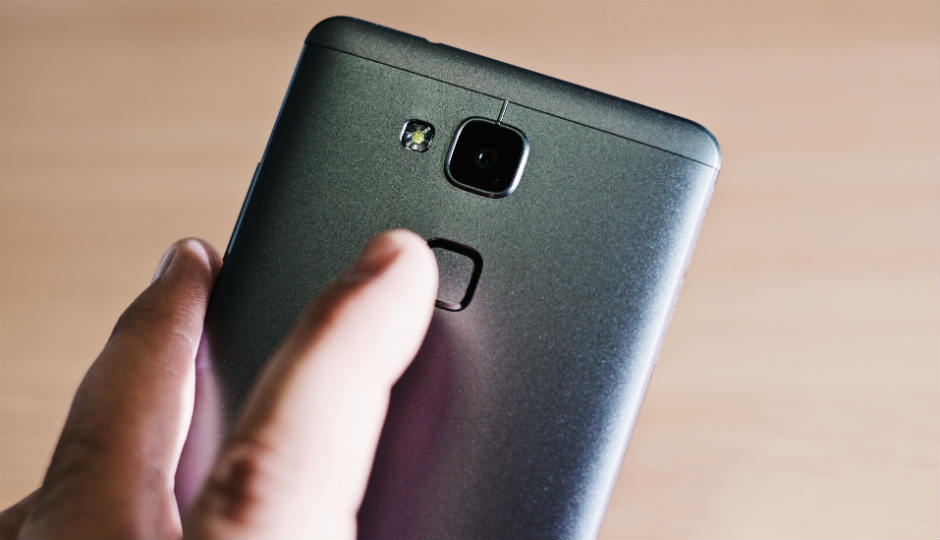
The fingerprint sensor or reader is one of the earliest biometric authentication technology to feature on a smartphone. The history of fingerprint authentication on smartphones dates back to 2004 when a South Korean company announced the Pantech GI100. The device was the first ever device to have a fingerprint scanner for authentication and speed dialing purposes. However, some sources opine that Apple started the modern-day fingerprint scanner revolution when it launched the TouchID with the iPhone 5s.
Pantech GI100
There are basically three types of fingerprint scanners used on smartphones and they differ in how they function and scan prints.
Optical scanners / sensors
Capacitive sensors
Unlike optical sensors that takes an image of your finger, capacitive sensors make use of capacitor circuits (its core component) to collect fingerprint data. This type of sensor is most used fingerprint sensor.
Ultrasonic sensors

This is a new sensor that was introduced by Qualcomm in 2016 on the LeeCo Le Max Pro. This sensor uses a transmitter to send ultrasonic pulse against your finger to create 3D details of your prints. Only ultrasonic sensors reproduce and store prints in 3D, making the ultrasonic system more secure than 2D versions created by optical and capacitive sensors.
Pros of Fingerprint scanning
Fast unlock time
Can be used for other purposes (like payment authentication) aside device unlock
Cons of Fingerprint scanning
Smartphone can be unlocked without user’s consent i.e when sleeping
Iris Scanner
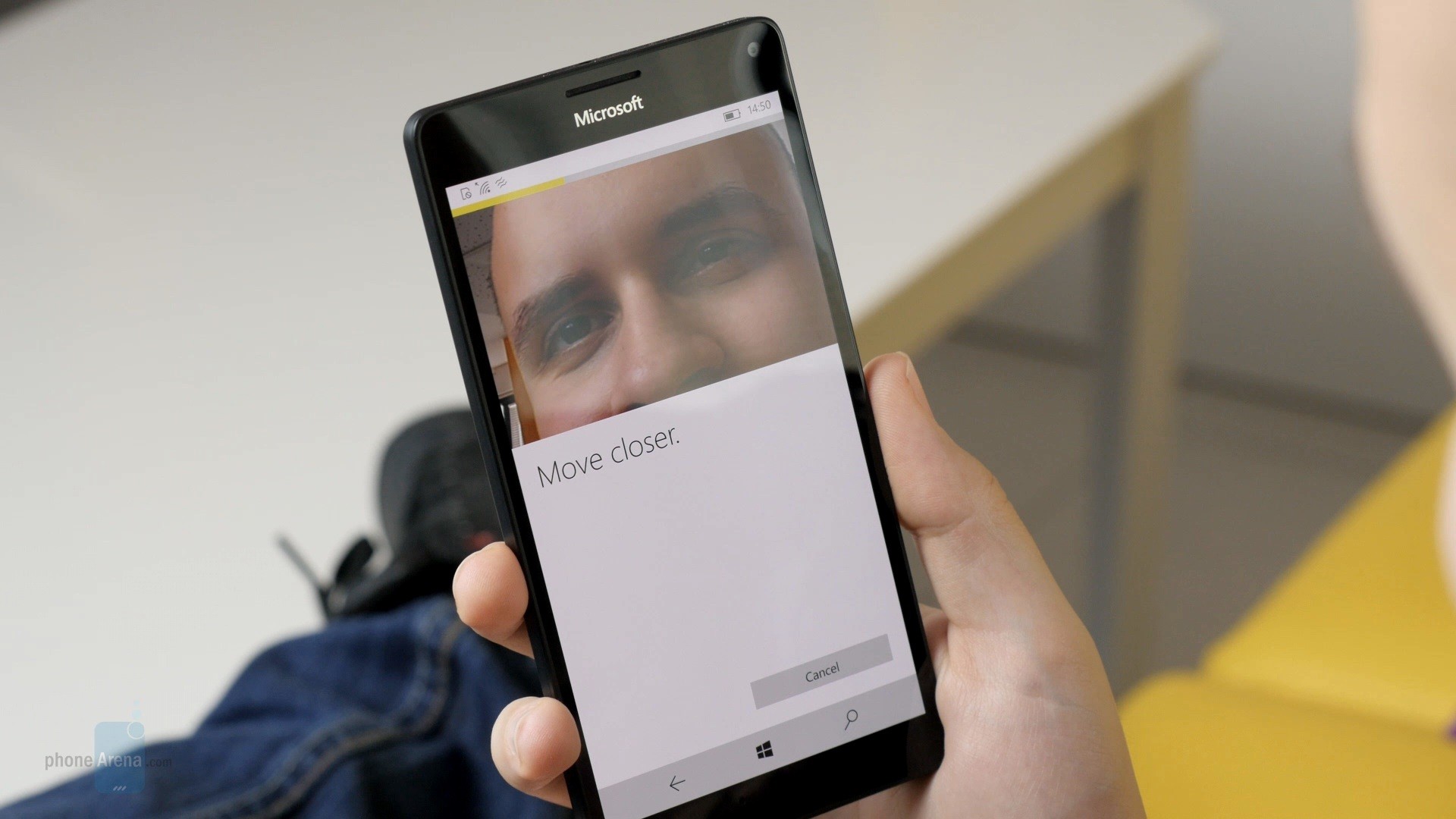
Iris scanning isn’t a very much popular biometric authentication method on a smartphone, it is also more sophisticated way of securing your smartphone. And though Iris scanning is commonly and mostly used on Samsung Galaxy flagships, the technology was first used on a phone — Fujitsu ARROWS NX F-04G — by Japanese company Fujitsu.
How does Iris Scanning work?
The structure of the human eye.
The Iris is a thin and circular structure in the eye. It adjusts the size of the pupil and also responsible for controlling the amount of light that enters the eye. Interestingly, just like fingerprints, no two humans in the world have exactly the same Iris.
The odds of any two irises being identical has been calculated to be one in 10 raised to the power of 78. Barring injury, the patterns remain stable through life, unlike faces, voices and even fingerprints.
The Iris scanner of your smartphone flashes near-infrared (NIR) light into one or both of your eyes to recognise your iris(es) and unlocks your device. The NIR light emitted by the iris sensor is safe and poses no risk to the user.
“The amount of infrared light is no more than would be received by walking outside on a sunny day.”
Pros of Iris Scanning
- Iris Scanning is more accurate — unlike fingerprint (40), the human Iris has 225 different points of comparison.
- Secures your device while you’re asleep.
Cons of Iris Scanning
- Iris scanners are expensive. Thus making phones with iris scanning capabilities generally pricier.
- Iris scanners can be fooled by a high quality (face or iris) image.
- Iris capture can be delayed if a user isn’t looking properly into the camera or if head isn’t still.
- Scanning under direct sunlight can be a problem since the iris may be obscured by bright reflections.
Some smartphones with Iris Scanning method of biometric authentication include Samsung Galaxy S9 Plus , Samsung Galaxy Note 9, LG G6, HTC U11 etc
Voice Recognition
Also known as Voice ID, Speaker recognition, or Voice Biometrics, Voice recognition is an authentication method that grants access to a device by identifying a user’s unique voice pattern.
How Voice Recognition works (www.howitwork.in)
When identifying and differentiating between voices, a device’s voice recognition software takes the following unique voice biometrics into consideration: sound, rhythm, pattern, dialect, speaking style, pitch, format frequencies and spectral magnitudes.
Pros and Cons of Iris Scanning
Voice recognition is also quicker, easier, and relatively more secure. However, there are reports and fears that a good mimic can bypass voice recognition authentication .
Facial Recognition
Facial recognition on Uhans i8 smartphone
Although Facial Recognition only recently became popular when Apple introduced to the iPhone X as Face ID, the isn’t the first instance the technology would be used on a smartphone. Facial Recognition as a form of smartphone security dates back to 2005 when ORMON Corporation, a global leader in automation, control technology, and sensing announced the OKAO Vision Face Recognition Sensor (which could be used on mobile phones, PDAs, and a y camera-enabled device) in Japan.
How does Facial Recognition works?
Depending on some factors like the manufacturer of your smartphone, facial recognition are of different types, have varying characteristics as well as patterns of functioning. Majorly, many smartphones that comes with the feature usually use the front-facing camera and dedicated software to record an image and properties of your face.
Each time you unlock your smartphone, it uses the front camera for recognition, comparing the original scan to what the camera sees. Advertisement - Continue reading below
Presently, there are many smartphones that comes with Facial recognition capabilities but Apple’s Face ID (on the iPhone X and subsequent iPhones), despite its shortcomings , is one of the most sophisticated.
Face ID on iPhone X
Face ID uses an IR beam projector and Infrared camera to create a 3D model of your face; it measures distance traveled by each beam before they hit your face. It is also the most effective, precise, accurate and safest facial recognition system ever used on a smartphone. Unlike most other facial recognition systems, Face ID takes extrinsic properties of the face like facial hairs, accessories into account. Its effectiveness isn’t hindered by growth or accessories as Face ID software automatically and occasionally recaptures and updates your facial template.
Pros
- Convenience — Facial Recognition might not be the safest method of biometric security, but you don’t have to tap buttons, keys, or touch any part of your smartphone before it unlocks.
- Fast and easy to set up
- Effectiveness not hindered by facial growth and accessories
Cons
- Intruders can gain access to your device if you’re asleep by simply placing your phone to your face.
Generally and conclusively, biometric authentication can not entirely replace PIN, passwords, patterns, code etc in terms of security and reliability, they can only supplement. Some of these biometric security systems are still in their early stages and undergoing research and development. Fingerprint sensors, for example, are now being placed under displays. Facial recognition are also becoming faster. It is becoming pretty much obvious that biometric means of authentication is the future of smartphone security.
Sodiq Olamide is a tech writer based in Nigeria, covering the latest reviews, how-tos, and news on consumer tech trends with a unique African perspective. Whether analyzing emerging technologies or offering practical guides, Sodiq brings a deep understanding of how technology shapes lives across the continent.
Type your email…
The Mobile World Congress (MWC) Barcelona , the world’s largest exhibition for the mobile industry, has just concluded. This annual event gathers leading technology brands to unveil groundbreaking mobile, AI, and digital solutions innovations. At MWC 2025, TECNO showcased a range of AI-driven products, reinforcing its commitment to cutting-edge technology.
The key launches included:
- CAMON 40 Series – AI-powered smartphones with One-Tap FlashSnap and advanced mobile imaging features.
- MEGABOOK S14 – The world’s lightest 14-inch OLED laptop, featuring AI-enhanced multitasking and Snapdragon® X Elite.
- MEGABOOK T14 Air & K15S – Lightweight ultrabooks with AI capabilities and extended battery life.
- TECNO AI Glasses Series – Smart eyewear integrating AI imaging, translation, and AR display.
Jan Stryjak, Associate Director at Counterpoint Research, shared, “In the past year, we have observed significant advancements in the field of AI. AI will continue to drive transformative changes in our daily lives. In this critical period for the economic development of emerging markets, TECNO’s AI technologies are unlocking potential for diverse needs.”
“The application of AI technologies is crucial and urgent in emerging markets. We’re committed to bridging the digital gap between emerging and mature markets,” said TECNO CMO, Laury Bai. “TECNO is taking a practical approach to make AI more accessible, ensuring users in emerging markets can access AI and cutting-edge technologies.”
Laury Bai, TECNO CMO
Driven by its commitment, TECNO has forged a robust partnership with MediaTek, establishing a joint AI laboratory dedicated to accelerating advancements in AI. At the event, James Chen, Vice President of Product and Technology Marketing at MediaTek, emphasized, “The synergistic R&D efforts between TECNO and MediaTek are set to democratize AI technology. Our collaboration powers a seamless, interconnected AI experience, bringing users a future of truly connected intelligence.”
James Chen, Vice President, Product and Technology Marketing at MediaTek
CAMON 40 Series Powered by AI One-Tap FlashSnap Revolutionizes Smartphone Snapshot Photography
TECNO’s Global Product Launch Officer, Olivier Mas, officially unveiled TECNO’s next-generation AI-driven products. Attendees at TECNO’s launch event witnessed the highly anticipated debut of TECNO’s new CAMON 40 Series, a device that embodies TECNO’s legacy of excellence in mobile imaging. Featuring One-Tap FlashSnap Mode and TECNO AI, the series sets a new benchmark in smartphone photography, delivering exceptional snapshot capabilities and AI-enhanced user experiences.
Olivier Mas, TECNO Global Product Launch Officer
The CAMON 40 Series exemplifies a commitment to innovation that transcends hardware and software, extending into strategic partnerships that deliver cutting-edge AI solutions to emerging markets. Matt Waldbusser, Managing Director of Global Solutions and Consumer AI at Google Cloud, remarked, “Our collaboration with TECNO on the CAMON 40 Series is a standout example. Leveraging Google Cloud’s capabilities, we’ve introduced groundbreaking features such as Ask Ella, AI Image Generator, AI Writing, and AI Translate. I am particularly impressed by the industry-leading and competitive edge of some of these innovations. For instance, TECNO’s AI supports text translation in 136 languages, voice translation in 44 languages, and photo translation in 51 languages. We are excited to further strengthen our partnership with TECNO, unlocking limitless potential to bring advanced yet practical AI capabilities to emerging markets in a convenient and secure manner.”
Matt Waldbusser, Managing Director of Global Solutions and Consumer AI at Google Cloud
The CAMON 40 Series’ innovative One-Tap FlashSnap leverages AI to enhance imaging capabilities, revolutionizing mobile photography. AI optimizes camera startup and continuous shooting for instant captures, while AI-powered multi-frame processing intelligently reduces noise and enhances details, delivering sharper, more refined images. Additionally, the BestMoment algorithm analyzes motion patterns, automatically selecting the optimal frames for precise, high-quality shots in dynamic scenarios, ensuring users an unparalleled mobile imaging experience.
TECNO CAMON 40 Demonstrates the Cutting-Edge FlashSnap Capability
To delve deeper into the imaging prowess of the CAMON 40 Series, TECNO invited Frédéric Guichard, CEO of DXOMARK, to share the image performance of CAMON 40 Pro. Frédéric highlighted, “The CAMON 40 Pro 5G has demonstrated exceptional imaging and performance capabilities in our rigorous evaluations. We’ve been particularly impressed with photo performance being the best for devices under 600$, and the 1st eligible device to our Smart Choice Label.”
Onsite photo of Frédéric Guichard, CEO of DXOMARK
Beyond its advanced rapid-capture functionality, the integration of TECNO AI further enhances the device’s capabilities. Intelligent imaging, a 360° AI Call Assistant, and productivity tools elevate creativity and efficiency. Powered by MediaTek’s latest chipsets, the series ensures smooth performance, fast processing, and extended battery life. With a sleek, durable, and water-resistant design, it seamlessly blends style with practicality for modern users.
MEGABOOK S14, the World’s Lightest 14-inch OLED Laptop, Inspires Creators and Game Lovers
The MEGABOOK S14 is TECNO’s first OLED laptop and the industry’s lightest 14-inch OLED laptop, featuring a 2.8K OLED display and incredibly weighing only 899g (31.7oz). The laptop is equipped with the outstanding power of the Snapdragon® X Elite compute platform, the flagship chipset for AI PCs from Qualcomm Technologies, and integrates TECNO’s world’s first self-developed edge-side large-scale AI model, to achieve AI-enhanced multitasking.
World’s Lightest 14-inch Laptop MEGABOOK S14
Specifically designed for next-gen AI productivity, TECNO AI enhances the Ella AI Assistant, AI-powered PPT generation, AI-driven image search, smart albums, and offline meeting transcription with multilingual support. The External Graphics Dock, equipped with a powerful NVIDIA graphic card, delivers scalable, high-performance capabilities for design, gaming, and content creation. The laptop’s 2.8K OLED display with a 120Hz refresh rate ensures exceptional visuals, while DTS:X Ultra dual 2W speakers, Wi-Fi 6E, fingerprint login, and PC Manager optimize connectivity and user experience.
TECNO’s strategic partnership with Qualcomm Technologies was a highlight of the TECNO AI Ecosystem Product Launch event, demonstrating a shared vision for the future of AI PCs. Kedar Kondap, SVP & GM of Compute and Gaming at Qualcomm, took the stage to discuss the integration of Qualcomm’s cutting-edge PC chipset into the new MEGABOOK S14 laptop, underscoring TECNO’s commitment to delivering high-performance computing solutions.
Kedar Kondap, SVP & GM of Compute and Gaming at Qualcomm
In addition, TECNO also introduced several standout new products. The featherlight 999g (35.2oz) ultrabook MEGABOOK T14 Air, features high-speed storage and LPDDR5 memory, while the ultra-thin, all-metal MEGABOOK K15S, equipped with a powerful 70Wh battery and supported by a 65W PD GaN charger, offers a smarter and more long-lasting user experience. Both devices are empowered by TECNO AI with advanced AI capabilities such as AI Album and AI Voice Assistant, making them perfect companions for all aspects of life.
The Next Game-Changing Tech Innovation: See the World with the TECNO AI Glasses Series
TECNO’s new AI Glasses Series also took center stage with the introduction of TECNO AI Glasses Pro and TECNO AI Glasses, reimagining eyewear with cutting-edge imaging, intelligent interactions, and a sleek aesthetic. The TECNO AI Glasses feature an aviator design, while the Pro model showcases a browline style, both embodying timeless elegance and modern fashion.
TECNO AI Glasses Redefine the Way People See the Future
Equipped with a 50MP high-definition camera, the series integrates an OV50D sensor, a 100° ultra-wide-angle custom lens, and an AI ISP imaging chip, forming a mobile-grade imaging system. This system lets users capture stunning, high-resolution photos with advanced AI noise reduction and HDR capabilities. With real-time translation supporting over 100 languages, TECNO AI’s Ella empowers accurate translation even for less common languages, as well as voice control, AI-powered object recognition, and intelligent information summaries for ultimate convenience.
Additionally, the AI Glasses Pro features a MicroLED display with 7th-gen resin waveguide technology, offering a 30° field of view, over 1,500 nits of brightness AR display, and a lightweight, ultra-thin design. The AR display allows users to effortlessly enjoy features like translation display, navigation, information prompts, and teleprompting.
Equipped with a 250mAh battery, these glasses offer over 11 hours of music playback and 8 hours of mixed use with just 30 minutes of charging. An advanced ultra-linear speaker, bass enhancement, and spatial sound deliver an immersive audio experience, while Wi-Fi 6 and Bluetooth 5.4 ensure seamless connectivity.
With these innovative launches, TECNO is setting new standards in mobile imaging and AI-enhanced technology, shaping a more connected and empowered future for consumers in emerging markets. Once again, TECNO has showcased its cutting-edge innovation on the global stage at MWC. With the brand essence of “Stop at Nothing”, TECNO’s relentless pursuit of innovation is making AI-powered technology more accessible, allowing consumers to experience the future ahead of time.
Solomon Obwot is a tech writer based in Kampala, Uganda, with extensive experience in the local tech startup ecosystem. He covers the latest news and analysis on consumer tech, writes in-depth smartphone reviews, and conducts insightful interviews with industry experts. Solomon is also a passionate podcaster, sharing his knowledge and engaging in discussions about Africa’s rapidly growing tech landscape. Send emails to [email protected]
Type your email…
